|
Questions |
These are the questions associated with your Google Classroom homework. Please read through them before doing the reading assignment below. That way you'll know what to look for!
|
- What is the order in which organisms are classified, starting with “Life.” (You will be asked to memorize this!)
- Explain why it is important to give a species a scientific (as opposed to common) name. (Note that this was explained during an exercise in class!)
- Each level of the classification system is called a taxa. Are there generally more organisms in the Kingdom or in the Family taxa?
- Are there generally more organisms in the Phylum or in the Class taxa?
- Which domains have only one kingdom each? Name the domain and the kingdom.
- What is the proper way to type an organism’s scientific name? Demonstrate with the scientific name for modern humans.
- What is the proper way to write and organism’s scientific name? Demonstrate with the scientific name for modern humans.
- After doing the interactive “What is an Arthropod?,” which of the 6 organisms in this story has NONE of the 5 characteristics of an arthropod?
Classification of Living Things: Study Notes & Interactives
|
We'll watch the video above in our asynchronous class as an introduction to classification.
|
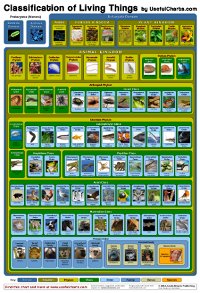
Click on this image to see a larger picture of this poster. This is the poster we have in our classroom.
|
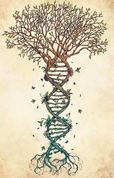
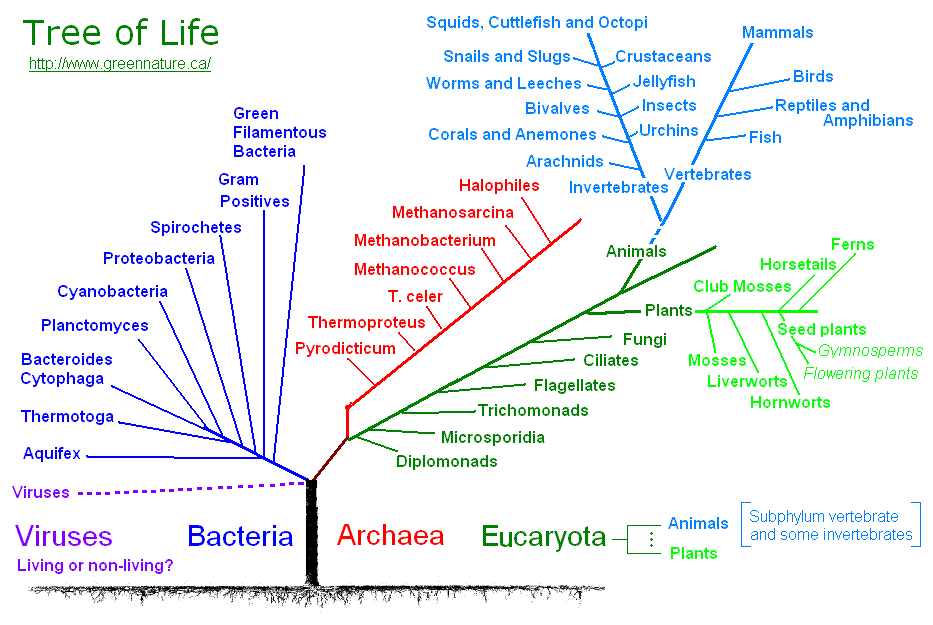
All of life descended from a single common ancestor
|
Over 2 million individual species have been identified, but estimates suggest that there may be from 10 to 100 million species living at this time. Scientists also estimate that 99% of all organisms that ever lived on earth are now extinct. All organisms are thought to have descended from a single common ancestor that lived over 3.6 billion years ago (that's the earliest fossil evidence we have found for bacteria). However, most species leave no fossil traces.
|
Extinct: a species that is no longer living on the planet
Ex. Tyrannosaurus rex (big carnivorous dinosaur) Extant: a species that is still living on Earth today Ex. Homo sapiens (humans) |
A Brief (very brief) discussion about evolution
|
If you go back far enough in time, the very first living thing on Earth is thought to be a simple bacteria. Last year we learned what all living things have in common...one of which is that their genetic material is DNA. We also learned that all living organisms require 5 common habitat resources (air, water, shelter, space, food). But how they acquire those resources depends on what particular adaptations they have. For example, plants make their own food, while animals must eat another living thing.
Over billions of years, the Earth has changed and continues to change and the genetic material of organisms has changed, or evolved, too, giving them adaptations that allow them to survive and reproduce in their habitat...or not. It is estimated that of ALL the species that have lived on Earth since it's beginning, 99% are extinct because they were not adapted to their changing environment (remember we learned in our Earth Structures unit last year that the earth is constantly changing). And because a habitat can change, a new genetic characteristic or adaptation will either make them successful ....or not. Remember! The definition of an adaptation is a physical or behavioral characteristic that allows an organisms to survive and reproduce in its habitat. |
What is DNA?
DNA is the genetic material that carries all the information about how an organism looks and functions. This genetic material is passed on from parent to offspring. Mutations (or errors) in the DNA can change these characteristics and how or whether an organism survives in its habitat. |
History of Taxonomy
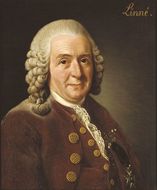
The inventor of the modern classification system was Carl von Linne. He changed his name to Carolus Linnaeus to model the latin naming system he used.
|

|
Scientists classify organisms based on common physical and behavioral characteristics. (Remember how you grouped your pasta, sticks, stoppers & seeds into different categories based on their shapes, colors & sizes? These are physical characteristics.) In your previous science class you may have used the word "structural" instead of physical. Both are correct.
The Linnaean classification system we use today was first invented in 1750 by Carolus Linnaeus. He classified organisms according to whether they shared similar physical features (for example, all birds have feathers and wings). With DNA technology, we can now investigate relationships based on the physical characteristics of their genes or DNA. As this new technology comes to greater use, we are finding that some species had to be reclassified into different taxa. |
Taxonomy
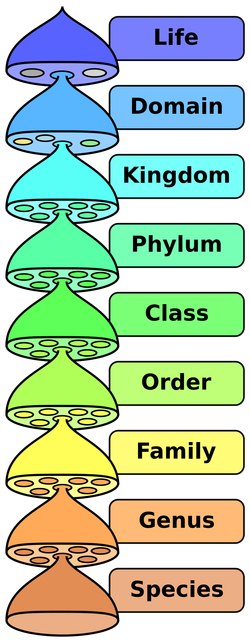
|
As more species are identified and their relationships to other species are understood, scientists adjust the classification system accordingly. As such, a larger grouping called a "domain" is generally agreed upon today. Using DNA technology, the system was modernized in the 1990's to include domain, but it also was rearranged, added to and renamed from 5 kingdoms to 6 kingdoms.
Currently there are 3 domains: Archaea, Bacteria and Eukaryota There are 6 kingdoms: Domain Archae has only one kingdom called, Archaebacteria Domain Bacteria has only one kingdom called, Eubacteria Domain Eukaryota has 4 kingdoms called, Protista, Fungae, Plantae and Animalia |
taxonomy: the study of naming and classifying organisms according to their relationships
taxa (or taxon): a level of classification Ex. "Kingdom" is one taxa 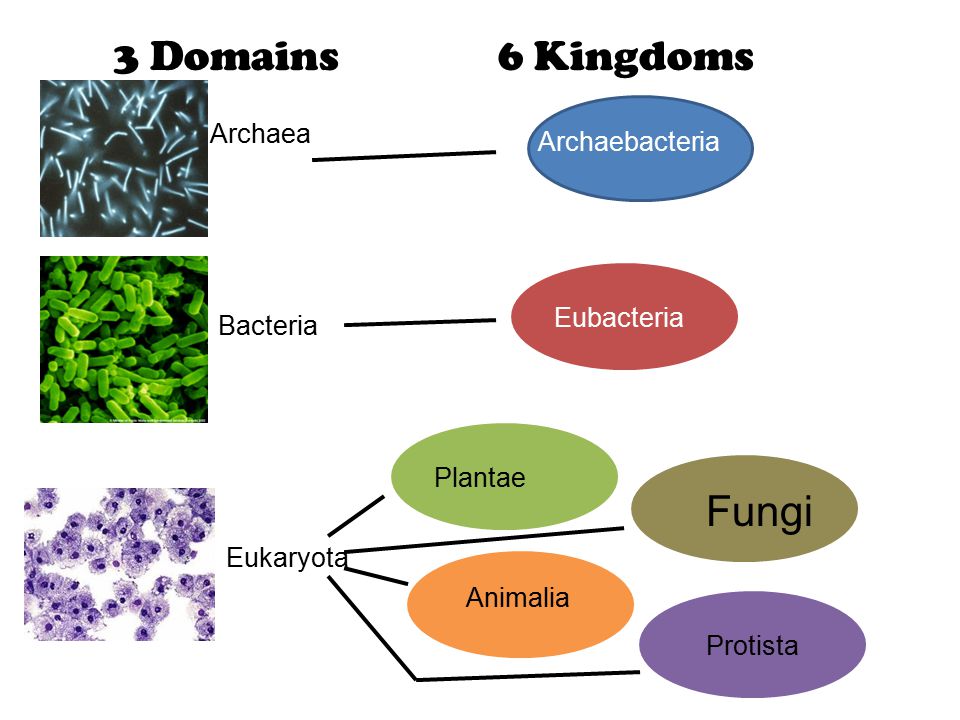
|
The difference between eukaryotic and prokaryotic organisms
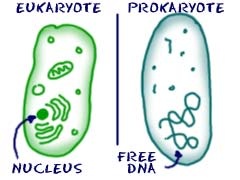
|
As organisms evolved (taking on new characteristics) from common ancestors over billions of years, some organisms are more closely related than others. For example, Eubacteria and Archaebacteria are "prokaryotes," whose genetic material (DNA) is free within the cell. "Eukaryotes," however, are more related to one another because their cells that have tiny organs called organelles such as a nucleus, which contains the cell's DNA.
|
Classifying organisms based on shared characteristics
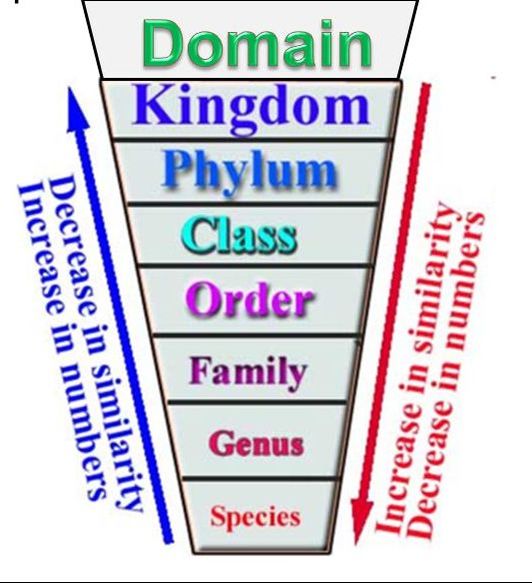
Note that as you go DOWN the taxa, the organisms are increasingly similar or related, but there are fewer organisms in those taxa
|
Each taxa is more specific, so the organisms that belong to the lower taxa have more in common with each other (are more related) than those they share higher taxa with.
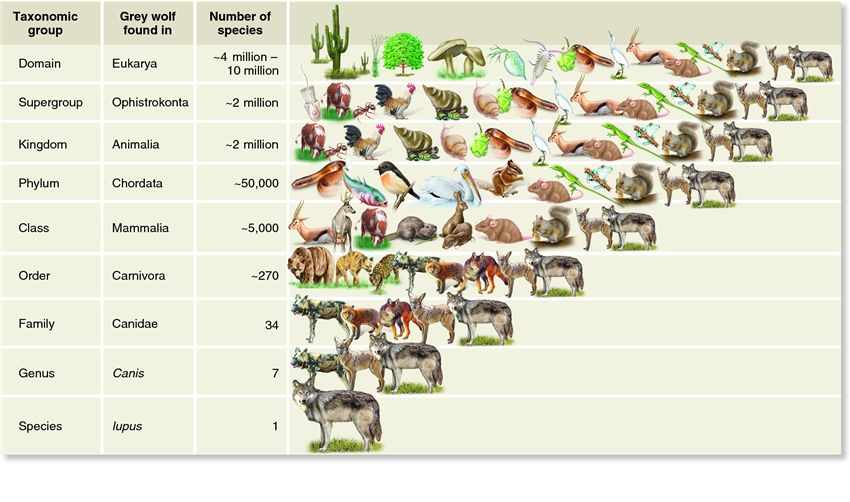
See if you can spot which organisms are removed (because they are less related to the wolf) as you move down the taxa
|
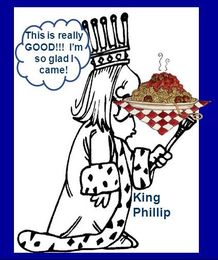
Can you come up with a better mnenomic?
We've been learning the classification song on our outings, but here are some examples of mnenomic devices that can help you remember the classification order as well. See if you can come up with one of your own and illustrate it. Now that we have added a new taxa, we might want to rewrite this to say Dear King Phillip Came Over For Good Spaghetti or Dueling Kings Play Checkers on Fat Green Stools.
|
|
Shared characteristics (often, but not always) means shared ancestry
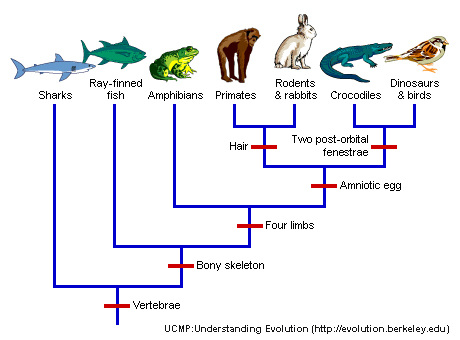
We group organisms into their respective taxa based on these shared characteristics AND their shared common ancestry. The red line indicates the common ancestor.
|
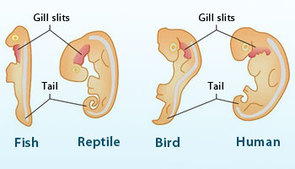
Did you know that you are related to fish? Yep! You both belong to Kingdom Animalia, Phylum Chordata, Sub-phylum Vertebrata. If you go back in time (about 400 million years), we had a common ancestor with fish. As mutations (changes in DNA) accumulated over long periods of time, some of the offspring developed characteristics that are fish-like and some developed characteristics that led to 4 limbs (tetrapods) which then led to organisms that had 4 limbs and were able to lay "amniotic" eggs on land or develop them within the body. Interestingly, when fish, amphibians, primates, rabbits & rodents, crocodiles and birds develop (called "embryos" when they are still developing), early in their development they all look like fish.
|
Your "Inner Fish"
|
In fact, early in your development, you not only look like a fish embryo, you also have early "gill slits"! As you continue to develop, those gill slits develop into your ears! The genes that are the blueprint for your ear are actually the gill blueprint that underwent mutations! This is one reason why the scientist Neil Shubin calls it your "inner fish!"
We group organisms into their respective taxa based on these shared characteristics AND their shared common ancestry. Being able to "read" DNA has helped scientists better see those relationships. |
Sometimes organisms have similar characteristics, but are not quite as related as you would think
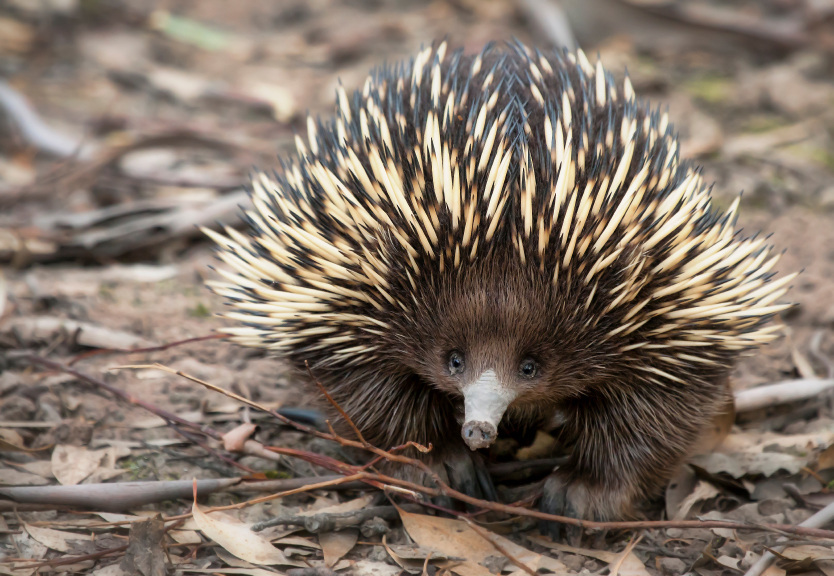
Echidna belongs to Order: Monotremata
|
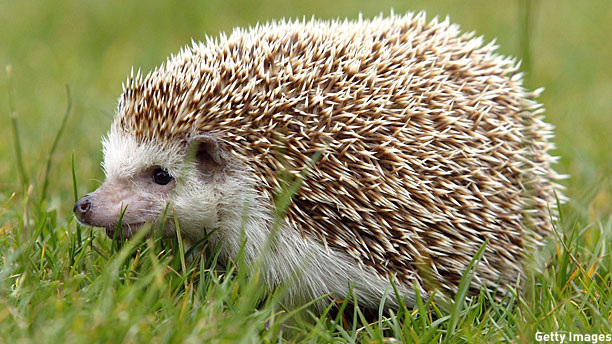
Hedgehog belongs to Order: Eulipotyphia
|
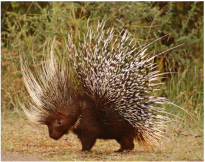
Porcupine belongs to Order: Rodentia
|
Sometimes organisms develop similar features, but they have different common ancestors, so they are not as closely related as you might think. For example, you may have black hair and dark skin, but your great, great, great grandparents may not. You have similar features, but you don't share a recent common ancestor, so you are not as closely related as you are to your parents.
The 3 organisms picture above all have spines. They are indeed related as mammals (Kingdom Animalia: Phylum Chordata: Class Mammalia), but upon closer inspection, we categorize them into different orders. So they may share a distant common ancestor with mammals, but as time progressed and new species evolved from that common ancestor, they became less related. Porcupines have more in common with rats, beavers and squirrels, echidnas have more in common with a platypus, and hedgehogs are more related to moles and shrews. It turns out that spines provided an advantage to their survival, but this characteristic evolved separately in each family line. When organisms that are generally unrelated develop similar characteristics (like wings in insects and birds, or the above examples), it is called "co-evolution."
The 3 organisms picture above all have spines. They are indeed related as mammals (Kingdom Animalia: Phylum Chordata: Class Mammalia), but upon closer inspection, we categorize them into different orders. So they may share a distant common ancestor with mammals, but as time progressed and new species evolved from that common ancestor, they became less related. Porcupines have more in common with rats, beavers and squirrels, echidnas have more in common with a platypus, and hedgehogs are more related to moles and shrews. It turns out that spines provided an advantage to their survival, but this characteristic evolved separately in each family line. When organisms that are generally unrelated develop similar characteristics (like wings in insects and birds, or the above examples), it is called "co-evolution."
Classifying Arthropods
Many of the organisms we find in our site studies belong to the Phylum Arthropoda. Indeed beetle and ant species are among the most abundant species on the planet - more so than humans! The image below shows which classes and orders within the Phylum Arthropoda some of these organisms belong to. Looking at the chart, can you name the class and order that butterflies and moths belong to?
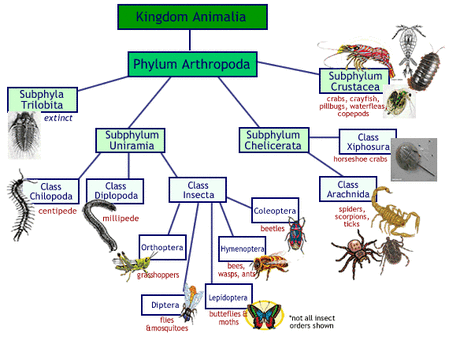 Arthro means jointed and pod means leg or foot. So the Phylum Arthropoda, among other things, have organisms with jointed legs. When you go through the interactive on the right, you'll see that mammals have jointed legs as well, but they are missing other characteristics of an arthropod. Arthro means jointed and pod means leg or foot. So the Phylum Arthropoda, among other things, have organisms with jointed legs. When you go through the interactive on the right, you'll see that mammals have jointed legs as well, but they are missing other characteristics of an arthropod.
|
What makes an arthropod?
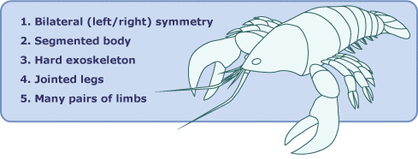 The five things that arthropods share The five things that arthropods share
Click on the image above and go through each page until you get to the page called "An Arthropod Checklist". There is a Google Classroom question above that this website will help you answer. Even though parts of this interactive require Adobe Flash, you can still learn about the Arthropod without doing the Flash components.
|
Why scientific names and how do we write them?
|
Why do we use scientific names in the first place? As you learned when we looked at all the common names for the roly poly, people of different cultures and even in the same culture may have different names for the same species - just like some Americans call a water fountain a bubbler. This causes some confusion when you ask someone to show you a roly poly and they call it a slater.
So scientists avoid confusion by giving a single species one and only one scientific name. This name also helps you categorize it according to their relatedness with other organisms. |
Classifying humans
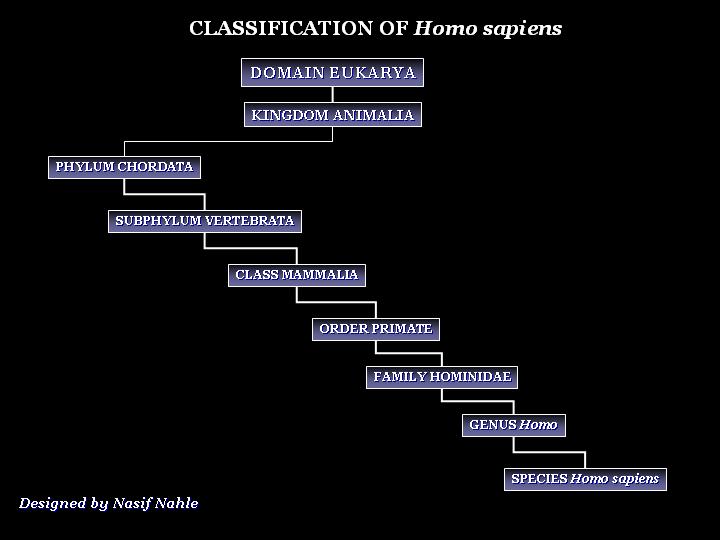
This is how humans are classified. The genus name is "Homo", and the species name is "sapiens", which means wise or knowing.
|
The scientific name of an organism includes both the genus and species names. For example, the scientific name of modern humans, as seen above, is Homo sapiens.
NOTE that the Genus is capitalized and the species is lowercase.
When typing the scientific name, both the genus and species are italicized as shown here: Homo sapiens
When handwriting the scientific name, you underline both names as shown here: Homo sapiens
NOTE that the Genus is capitalized and the species is lowercase.
When typing the scientific name, both the genus and species are italicized as shown here: Homo sapiens
When handwriting the scientific name, you underline both names as shown here: Homo sapiens
Fish Sorting - This is a separate homework assignment!
In class we will use the 'dichotymus' system for figuring out the common names of the fish pictured below. Your homework is to click on the pictures to find the Genus & species of each fish. Then click on two pictures of your choice and find out what their complete classification is. You should find the names of the Domain Kingdom, Phylum, Class, Order, Family, Genus and species. See if you can find the one species of fish that is less closely related to the other fish below and tell me why.
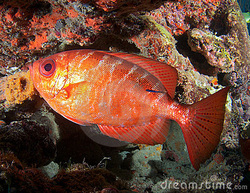 Glass-eyed snapper 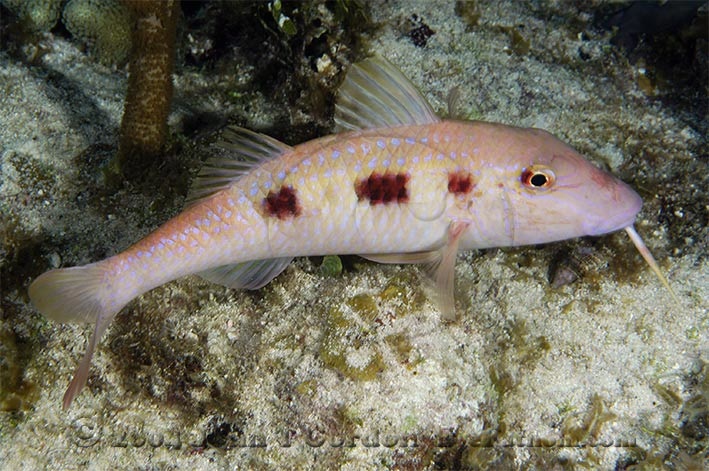
Spotted goatfish
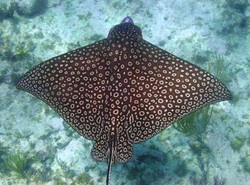 Spotted eagle ray 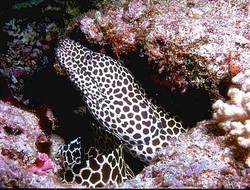 Spotted moray eel |
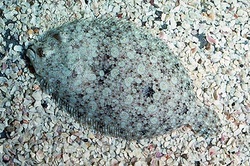 Peacock flounder 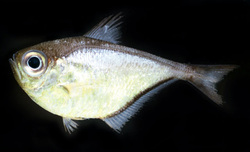 Glassy sweeper 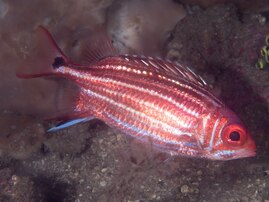
3 spot squirrel fish
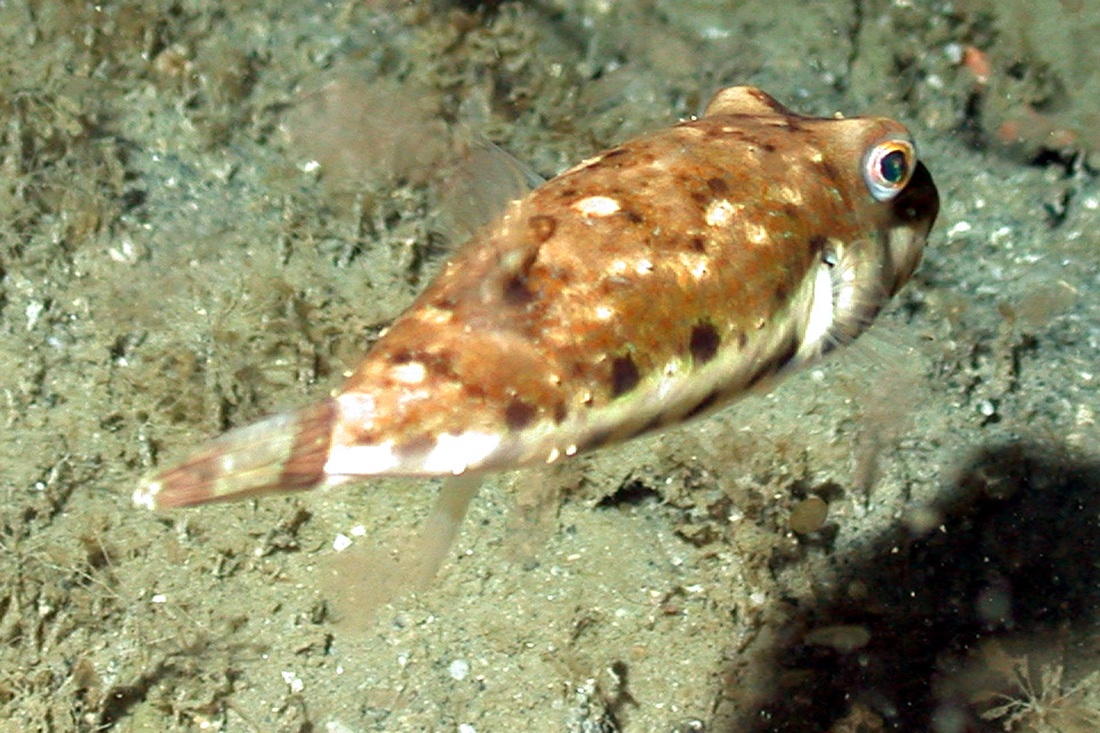
Bandtail puffer
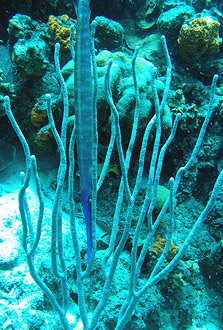 Trumpet fish |
